



Allergen labelling can quickly become complicated when you manufacture composite foods.
A ready meal, filled pastry or coated meat product may contain several components, each with its own ingredients and allergens. A chicken kiev, for example, could include seasoned chicken, garlic butter, breadcrumbs and a coating mix supplied by different manufacturers.
The finished label still needs to give consumers clear and accurate information about what is inside the product. This means understanding every component, keeping specifications up to date and making sure the correct information reaches the right label.
What are the UK allergen labelling requirements?
Under UK food allergen labelling requirements, manufacturers must declare any of the 14 regulated allergens when they are used as ingredients or processing aids in a product.
The 14 allergens are celery, cereals containing gluten (including wheat, rye, barley and oats), crustaceans, eggs, fish, lupin, milk, molluscs, mustard, nuts, peanuts, sesame, soya and sulphur dioxide or sulphites at levels above 10mg per kilogram or litre.
For prepacked food, allergens must be clearly emphasised within the ingredients list. Manufacturers might use bold text, capital letters or another clear style that makes them stand out from the surrounding ingredients.
Ingredients should generally be listed in descending order by weight, with the main ingredient appearing first.
Why are composite foods more difficult to label?
Composite foods contain several components or prepared ingredients, such as:
- Ready meals with sauces and seasoning blends
- Pies with pastry, filling and glaze
- Sandwiches with bread, spreads and prepared fillings
- Breaded or battered meat and fish
- Pizzas with dough, sauce, cheese and toppings
- Desserts with sponge, cream and decorations
Each component may contain several ingredients and allergens. For example, a beef lasagne could contain milk and wheat in the cheese sauce, wheat and egg in the pasta and celery in the stock.
All this information must be carried through accurately to the final label. Listing only “cheese sauce”, “pasta” or “stock” is not enough without including the relevant ingredients and allergens they contain.
How should allergens appear within compound ingredients?
A compound ingredient is made from two or more ingredients, such as mayonnaise, pastry, chocolate or a prepared sauce.
Its individual ingredients will normally need to be listed in brackets after the compound ingredient’s name, with any regulated allergens clearly emphasised.
For example: Cheese sauce [water, cheddar cheese (MILK), cream (MILK), modified starch, WHEAT flour, salt]
This helps consumers see exactly which allergens are present. Manufacturers must also make sure supplier changes, recipe updates and substitute ingredients are reflected on the label so outdated allergen information is not used.
What is precautionary allergen labelling?
Precautionary allergen labelling includes statements such as “may contain peanuts” or “may contain traces of nuts”.
These warnings should only be used when a risk assessment identifies a genuine and unavoidable risk of allergen cross-contact. They should not replace effective cleaning, separation and production controls.
For example, if a risk assessment identifies an unavoidable risk of allergen cross-contact on a shared production line, a specific “may contain” warning may be appropriate. This should only be used after effective cleaning, segregation and production controls have been considered.
Using broad warnings on every product can unnecessarily limit consumer choice and make allergen information less useful.
Common allergen labelling risks in food manufacturing
Outdated supplier specifications
A supplier may change a seasoning blend by adding mustard powder or switching to a wheat-based carrier. Even a small change can affect the finished product label, so specifications, recipes and labels must be updated before the new ingredient enters production.
Using the wrong recipe version
An older recipe may still be in use while a reformulated version is introduced. If the wrong recipe or packaging is selected, the product and label may no longer match.
Clear version control is especially important when producing similar products or several retailer variants.
Manual copying between systems
Copying allergen data between supplier specifications, spreadsheets and label templates increases the risk of mistakes.
A recipe management system like FORMIX enables manufacturers to manage recipes, ingredients and production information from a single location, making updates simpler and more efficient.
Incorrect packaging or labels
A product can be made correctly but still carry the wrong label.
This is particularly important for food covered by Natasha’s Law. Food prepacked for direct sale must display the name of the product and a full ingredients list, with regulated allergens clearly emphasised.
Problems can also arise when similar products are packed on the same line, such as a pasta containing milk alongside a dairy-free version. Label verification, line clearance and barcode checks can help reduce this risk.
How can manufacturers improve allergen label control?
Good allergen labelling starts with accurate information and clear control at every stage.
Manufacturers should:
- Keep supplier specifications and allergen data up to date
- Use approved recipes with clear version control
- Review recipe changes before they reach production
- Link production data directly to label printing where possible
- Check that the correct label is applied to every product and outer case
Here at Hellenic, we provide reliable labelling and traceability solutions that help food manufacturers improve control and reduce the risk of labelling errors. Reliable hardware, such as our industrial label printers, supports clear and consistent printing across production, warehouse and despatch areas.
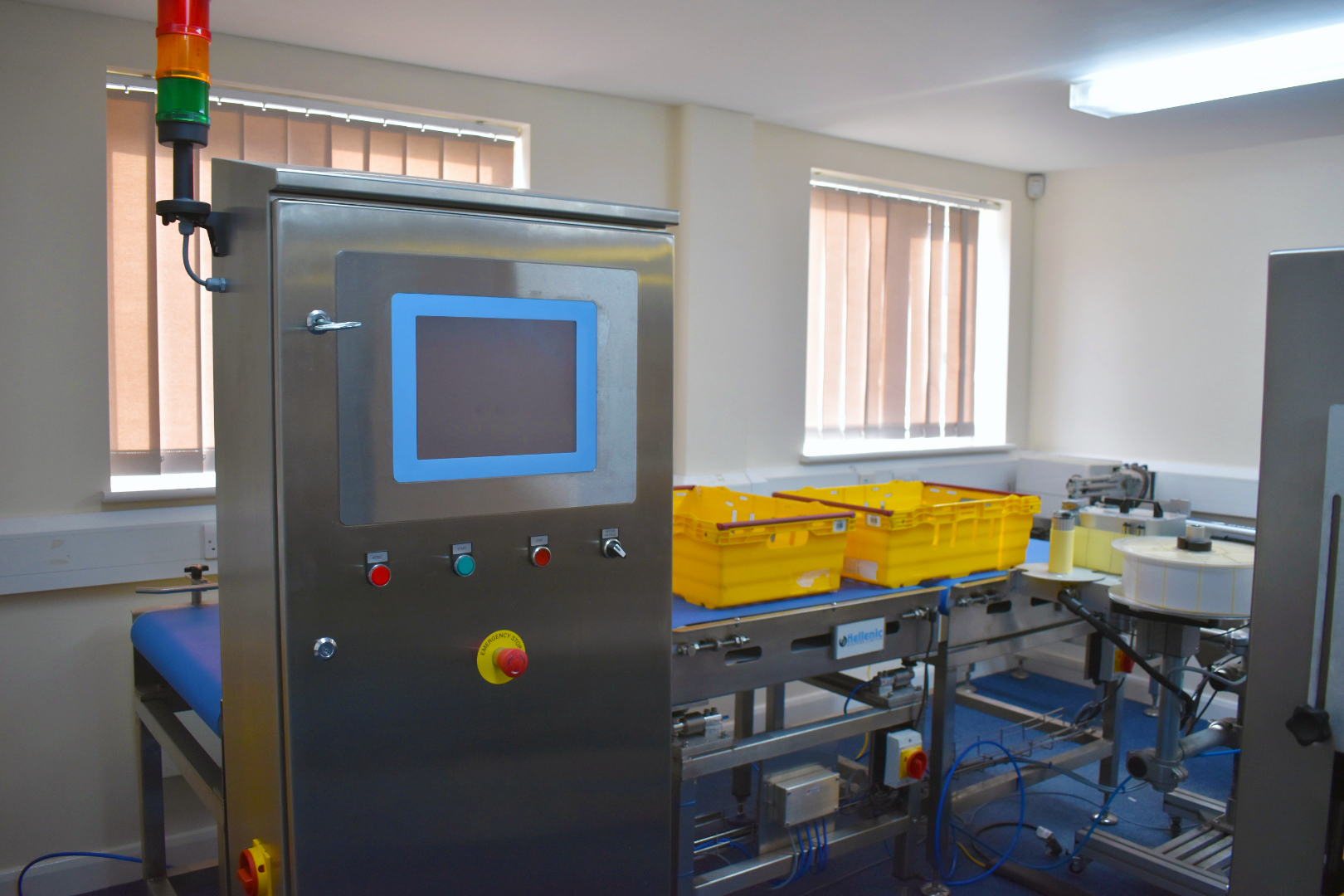
For outer case labelling, our Outer Case Marking System combines weighing, labelling and traceability integration in one solution. For higher-volume production lines, our Auto Outer Case Marking System automates the process to improve accuracy, efficiency and throughput.
Building allergen control into everyday production
For composite food manufacturers, accurate allergen labelling depends on having the right information at every stage, from recipe management and production through to packing and despatch.
By connecting these processes, we can help manufacturers reduce manual errors, keep labels up to date and manage recipe or supplier changes more effectively.
To discuss how we can support your allergen labelling, traceability and production processes, call 01245 325 753 or email sales@hellenic.co.uk.